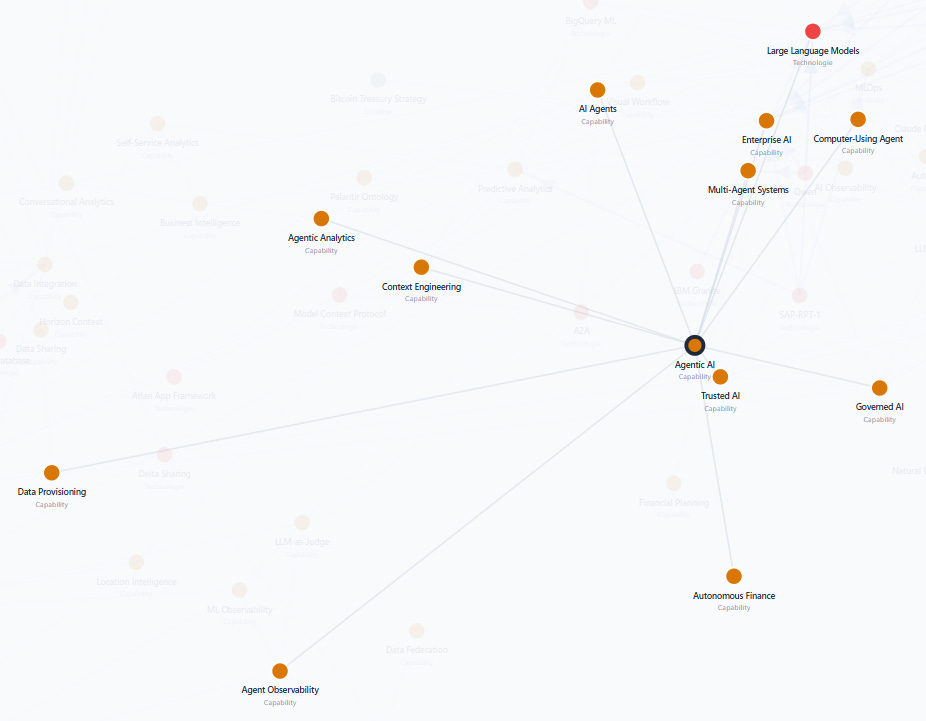
Agentic AI
The question is what the platform must be for agents to do it reliably

The difference between a recommendation and an action seems small. One produces a suggestion a human can accept, reject, or ignore. The other changes something in the world - sends an email, triggers a process, updates a record. When an AI system moves from answering questions to taking actions, the tolerance for error doesn’t just shrink. It disappears.
This is the shift Agentic AI brings to data platforms - and it is more consequential than most platform roadmaps currently reflect.
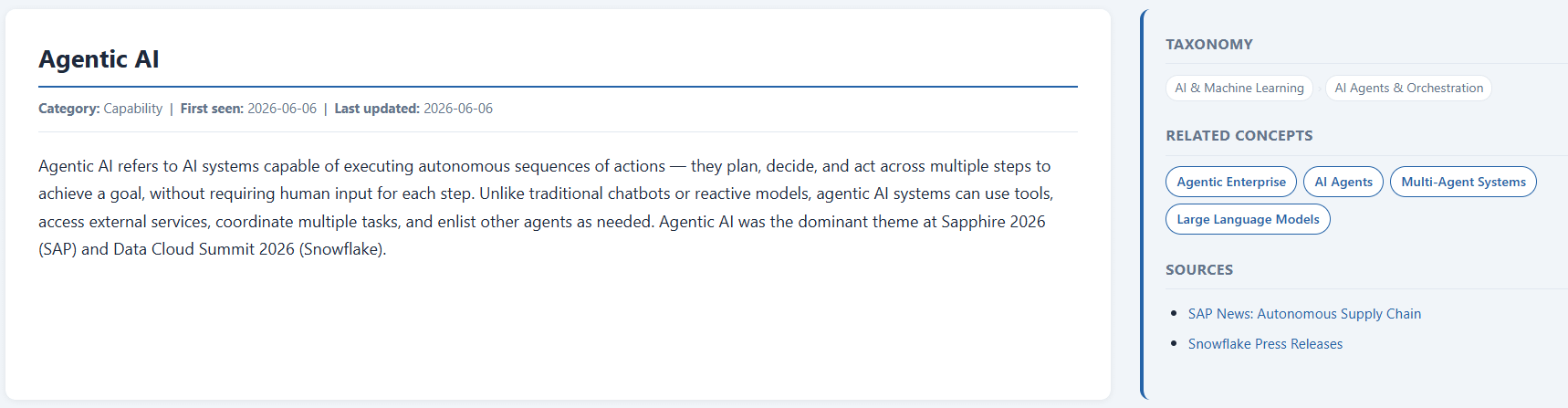
Autonomy Scales. So Does Failure.
A single agent operating in isolation is already a significant departure from a conversational model. It plans, uses tools, calls external services, and loops until it reaches a goal. But the architectures now emerging are not single-agent. Multi-agent systems distribute this autonomy across orchestrators and specialists: one agent plans, another retrieves data, a third executes, a fourth verifies. The throughput scales. So does the compounding of errors.
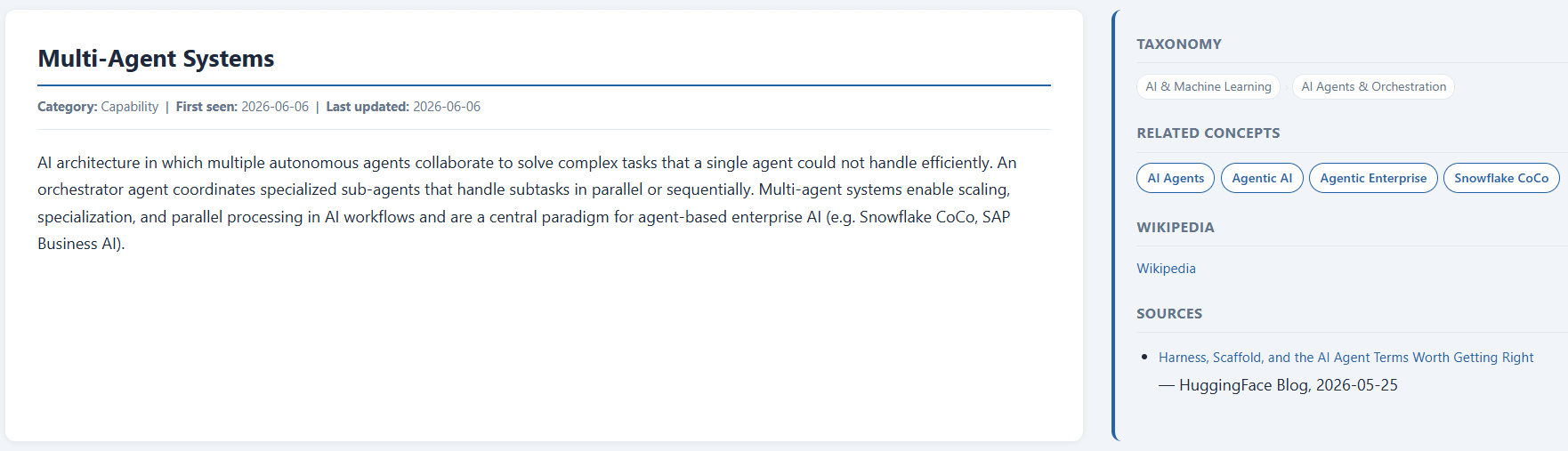
In a traditional data workflow, a bad query returns wrong results. A human notices, investigates, corrects. In an agentic workflow, a misrouted instruction reaches a sub-agent that acts on it before any human is in the loop. The failure mode is not a wrong number in a dashboard - it is an incorrect decision executed at machine speed.
This is not an argument against multi-agent architectures. It is an argument for understanding what they depend on.
The Bottleneck Is Context, Not Capability
Much of the current conversation about agentic systems focuses on model intelligence: which LLM reasons better, which orchestration framework is more capable. This is the wrong constraint to optimize. In production enterprise environments, the limiting factor is almost never the model. It is the context the model receives.
Context Engineering - the discipline of assembling the right data, definitions, lineage, and policies into an agent’s working memory - is what separates a capable agent from a reliable one. A model that cannot access the authoritative definition of a business metric, the freshness timestamp of a dataset, or the access policy governing a table will hallucinate substitutes. It will act confidently on incomplete or stale information.
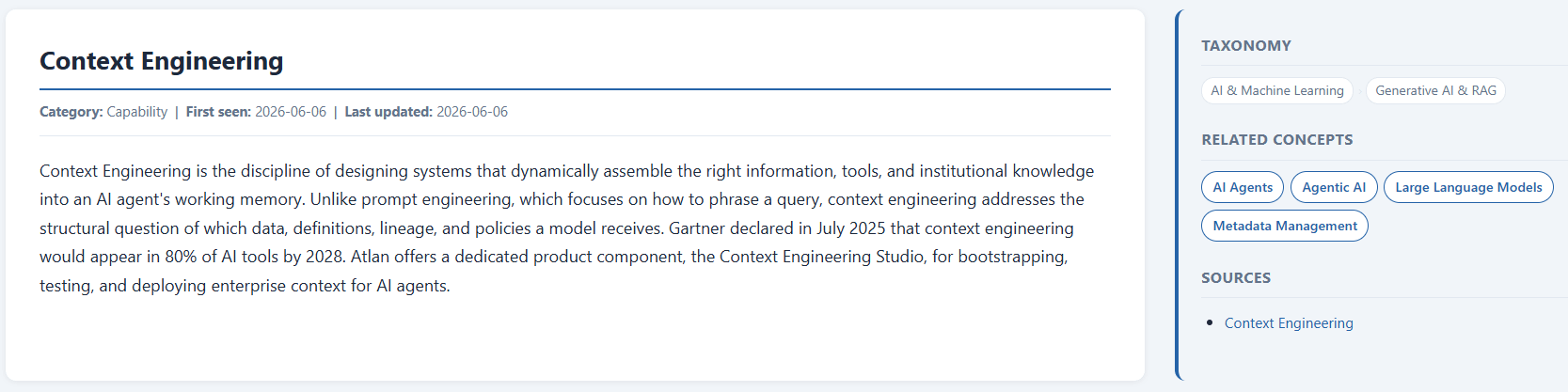
This makes Metadata Management a first-class concern for any agentic platform - not as a governance checkbox, but as the substrate that makes agents trustworthy. An agent that knows what a dataset means, where it came from, who owns it, and when it was last validated is a fundamentally different system than one that knows only its current values.
Governance As Infrastructure, Not Oversight
The instinct in many organizations is to treat AI governance as a review layer applied after agents are built - a set of rules added on top of a working system. Agentic AI exposes why this sequencing fails.
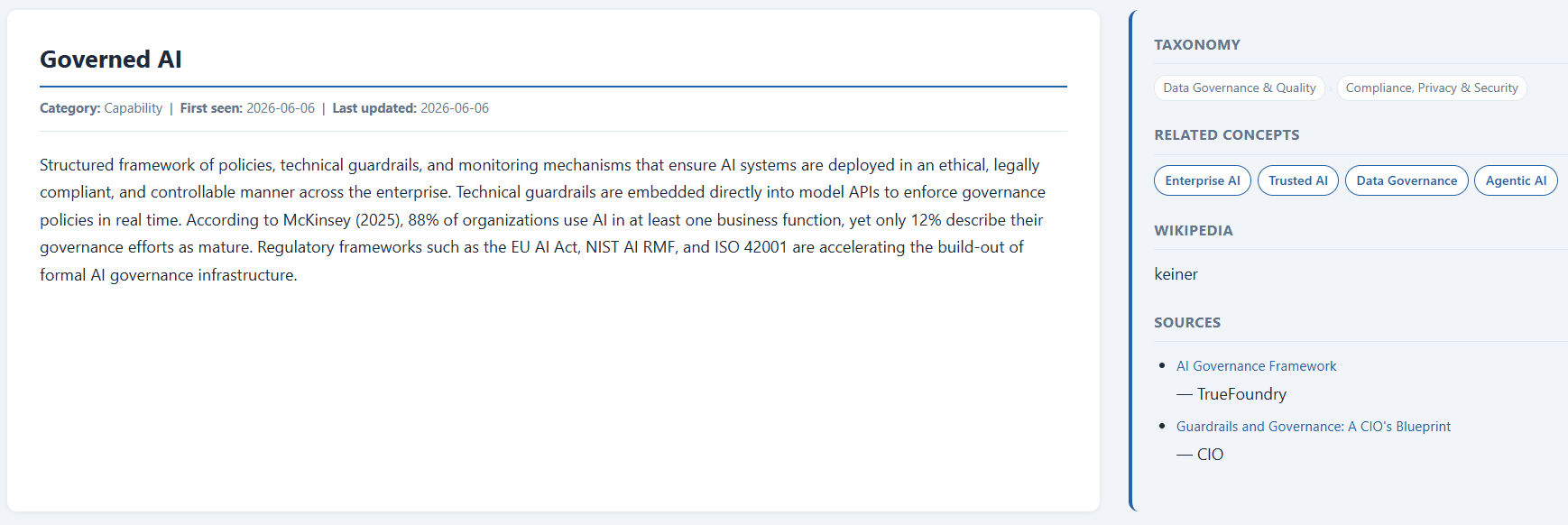
Governed AI requires that policies, guardrails, and audit trails are embedded in the agent’s operating environment from the start. An agent that can take consequential actions across finance, supply chain, or customer data without embedded constraints is not an enterprise system. It is a liability.
The practical implication:
Data Governance infrastructure - access controls, lineage tracking, data quality contracts - becomes the foundation on which agent behavior is either constrained or enabled.
Organizations that have invested in mature governance find that their agents can operate with wider autonomy precisely because the guardrails are already part of the data layer. Those that have not will discover the gap at the worst possible moment.
Frameworks like Expert-to-Agent (Dataiku), which wire approval workflows and audit trails directly into the agent-building process, point toward what governed agentic deployment looks like in practice.
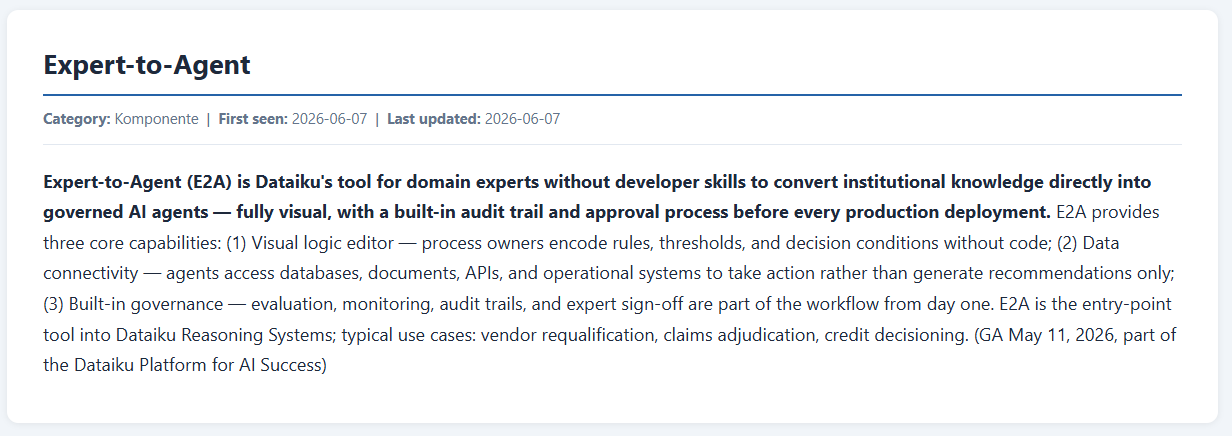
Fig. 5: Expert-to-Agent Framework by Dataiku
You Cannot Govern What You Cannot See
The visibility problem does not disappear once agents are in production. It compounds. Multi-agent workflows are opaque by design - a user submits a goal, and a network of agents determines how to reach it. Intermediate steps, tool calls, data retrievals, and sub-agent delegations happen below the surface.
Agent Observability - tracking prompts, completions, latency, failures, and the link between agent outputs and their source data - is the only mechanism that makes agentic systems auditable. Without it, an organization cannot distinguish a reliable agent from a plausible-looking one. It cannot trace a bad outcome back to its root cause. It cannot demonstrate compliance.
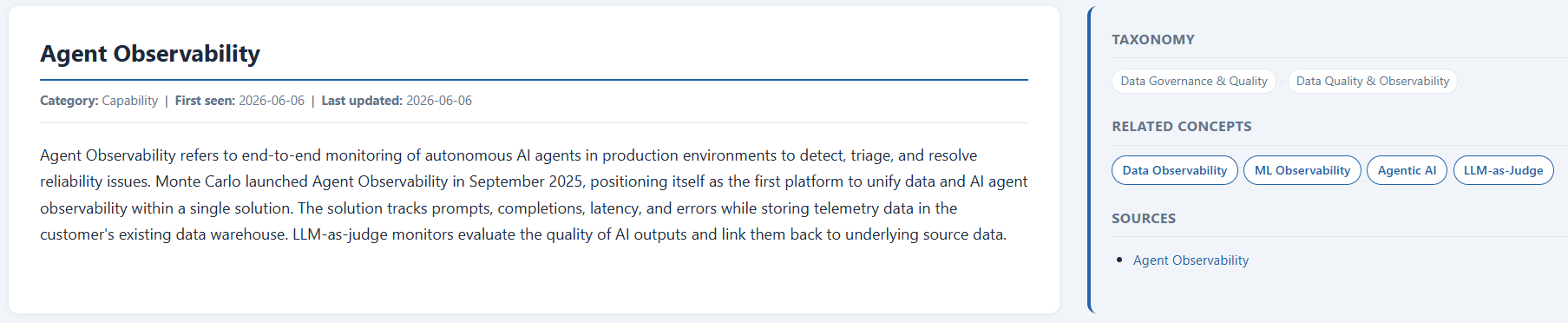
Data Observability and Agent Observability are converging because they address the same underlying problem: autonomous systems need continuous monitoring at both the data layer and the reasoning layer. Neither is sufficient alone.
What Platform Teams Need To Rethink
The arrival of Agentic AI does not require rebuilding the data platform. It requires reclassifying its components. Metadata management, data governance, and observability were previously framed as enabling better human decisions. They now also enable better agent decisions - and the stakes are higher, because agents act without pausing to reflect.
For platform architects, this means three things:
Invest in context quality before agent capability: an agent with poor context will consistently underperform a less sophisticated model that receives rich, accurate, well-governed data.
Design governance as infrastructure, not oversight: access policies, lineage, and audit trails need to be wired into the agent’s environment from day one, not appended after deployment.
Treat observability as non-negotiable: an agentic system you cannot monitor is a system you cannot trust, correct, or explain to a regulator.
The conversation about Agentic AI has been dominated by what agents can do. The more important question is what the platform must be for agents to do it reliably.